


Key Points:
- Physical therapy exercises for autism can improve balance, motor coordination, posture, and body awareness in children with ASD.
- Structured movement routines help address sensory integration challenges and boost confidence and independence.
- Incorporating therapeutic play into daily routines strengthens physical and emotional development.
Children on the autism spectrum often face motor challenges, including poor coordination, balance issues, and low muscle tone. According to research, motor impairments are present in up to 85% of autistic individuals. Addressing these challenges through targeted physical therapy can help children build strength, develop better body control, and gain confidence in physical activities.
In this article, we’ll go over the most effective and developmentally appropriate physical therapy exercises for autism and explain how parents can support their child’s physical development at home or alongside professional support.
What are the Best Physical Therapy Exercises for Autism?
Physical therapy exercises for autism help improve balance, coordination, core strength, and motor planning through purposeful movement. These exercises are designed to meet sensory needs while helping children build physical skills in a safe, predictable environment.
Common activities include balance work, crossing the midline, strengthening exercises, and stretching. When done regularly, these exercises can significantly improve physical functioning and reduce frustration related to motor delays.
Why Do Children with Autism Benefit from Physical Therapy?
Motor delays in autism aren’t just about clumsiness—they often tie back to core challenges in sensory processing and motor planning. A child may struggle with catching a ball not because of disinterest but because their body has trouble coordinating the timing, vision, and motor control required.
Physical therapy addresses these foundational issues. It helps children become more aware of their bodies in space (proprioception), tolerate sensory input more effectively, and move with intention. This can translate to improvements in everyday activities like walking upstairs, writing, or participating in play.
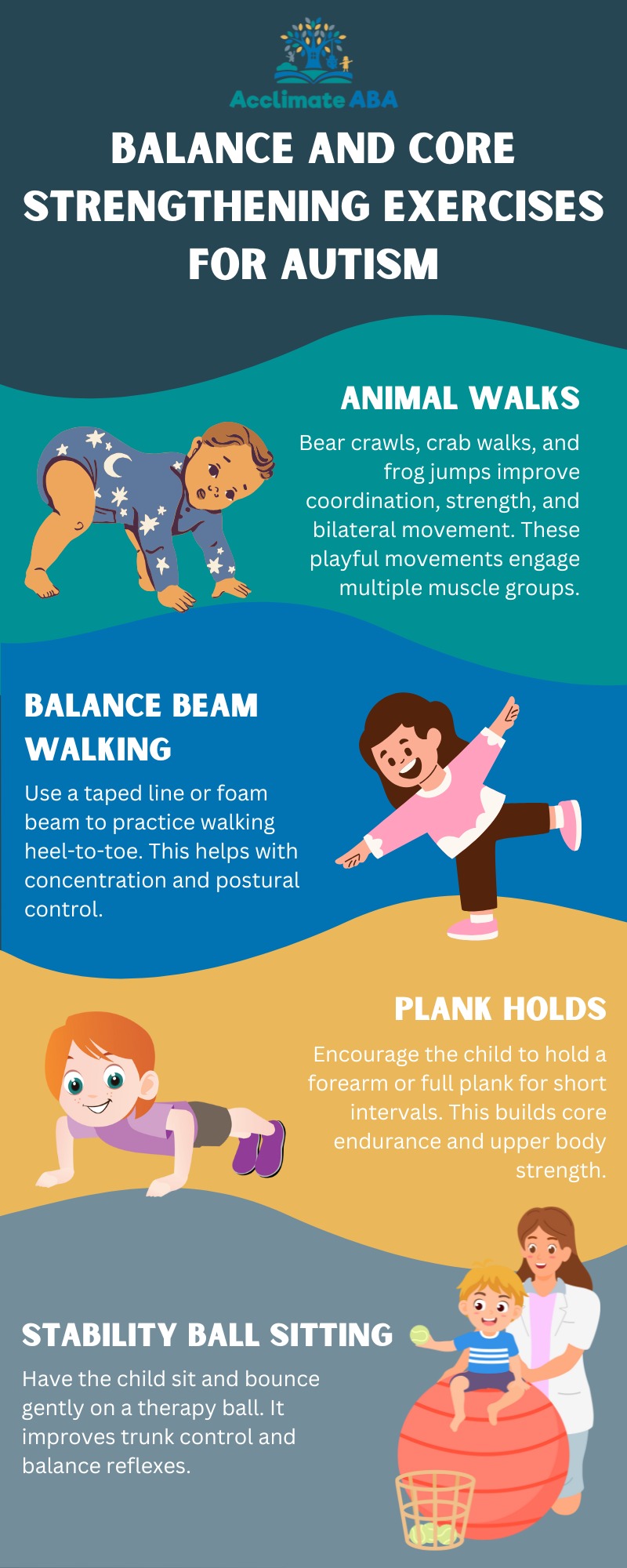
Balance and Core Strengthening Exercises
Poor balance and weak core muscles can lead to posture problems, delayed motor skills, and increased fatigue. Exercises that build strength in the abdominal and back muscles help children maintain stability in movement.
Here are some effective core and balance-focused exercises:
 What Should Parents Take Note of When Encouraging Their Autistic Child to Exercise?
 What Should Parents Take Note of When Encouraging Their Autistic Child to Exercise?
When encouraging exercise for an autistic child, parents should prioritize sensory preferences, predictability, and enjoyment. Activities that align with the child’s interests—like swimming, jumping, or biking—are more likely to be successful. Consider how sensory sensitivities may affect comfort with certain movements, textures, or environments, and modify accordingly.
Visual schedules, simple instructions, and routine consistency can make physical activity feel less overwhelming. Importantly, exercise should be framed as fun rather than mandatory. By focusing on small, achievable goals and celebrating effort over outcome, families can promote physical health, reduce stress, and build motor confidence in autistic children. These everyday strategies are just a glimpse into how autism shapes routines and behavior—explore more in our article How Autism Affects Daily Life: Key Insights & Solutions.
Coordination and Motor Planning Activities
Motor planning refers to the ability to think through and carry out motor actions. Many children with autism struggle with sequencing movement, which affects things like dressing, climbing, or playing sports. These exercises help with timing and spatial awareness.
Try these activities to improve coordination:
1. Obstacle Courses
Create physical challenges with climbing, crawling, and hopping stations to improve movement sequencing, spatial awareness, and whole-body coordination in a fun and engaging way.
2. Ball Toss or Bounce
Use therapy balls or beanbags to build timing, visual tracking, and hand-eye coordination while keeping the activity simple and low-pressure.
3. Jump Rope Practice
Begin with imitation jumps, then introduce an actual rope to develop rhythm, coordination, and bilateral movement at a comfortable pace.
4. Simon Says (Movement Version)
Playfully practice following movement instructions like “spin” or “squat” to strengthen listening skills, motor planning, and body awareness through imitation.
5. Footprint Patterns on Floor
Tape footprints or shapes on the floor and guide your child to follow specific patterns, encouraging direction-following and improving motor sequencing skills.
Sensory Integration Through Movement
Children with autism may be under- or over-responsive to sensory input. Movement-based sensory integration activities can help regulate these responses and make the child more comfortable in their environment.
Here are exercises that support sensory regulation:
1. Swinging or Rocking
Gentle front-to-back swinging provides calming vestibular input, helping children regulate their sensory systems and feel more grounded in their environment.
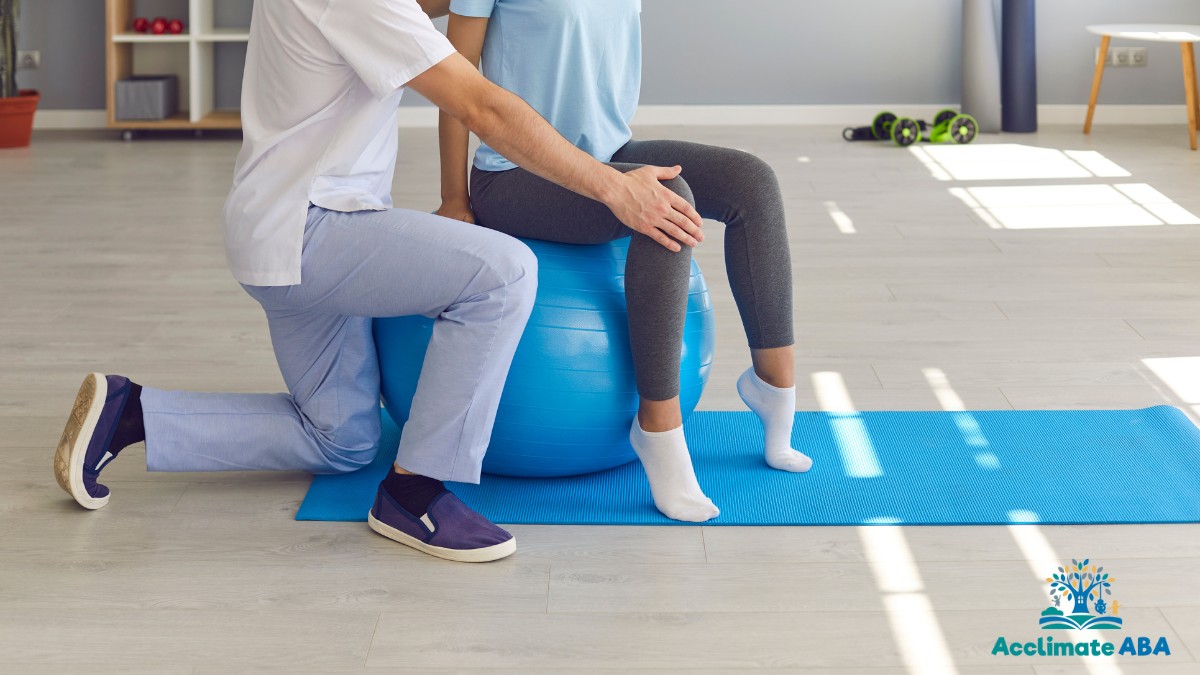
2. Therapy Ball Bouncing
Rhythmic bouncing on a therapy ball helps modulate alertness levels and strengthens body awareness through proprioceptive input.
3. Wall Push-Ups
Simple wall push-ups deliver deep pressure input and help build upper body strength, supporting both sensory regulation and motor control.
4. Weighted Ball Toss
Using a light medicine ball for toss games boosts joint awareness and gives proprioceptive feedback, improving body coordination and sensory processing.
5. Scooter Board Activities
Riding a scooter board engages the vestibular and proprioceptive systems, supporting full-body coordination and improving motor planning through playful movement.
Flexibility and Stretching Routines
Many autistic children have tight muscles or awkward postures due to hypotonia or hypertonia. Regular stretching helps maintain range of motion, improve comfort, and prevent injuries.
Incorporate these stretching exercises:
1. Cat-Cow Stretch
This gentle yoga movement enhances spinal flexibility and body awareness, making it ideal for improving posture and relieving tension in the back.
2. Hamstring Stretch
Whether seated or standing, reaching for the toes stretches the back of the legs, promoting flexibility and preventing stiffness.
3. Shoulder Rolls and Arm Circles
These movements loosen the shoulders and upper arms, improving circulation and reducing muscle tension in the upper body.
4. Butterfly Stretch
Sitting with feet together and knees out stretches the inner thighs and hips, supporting mobility and comfort during seated tasks.
5. Side Reaches
Reaching to the side helps elongate trunk muscles and supports better core strength and upright posture.
How Can Parents Implement These Exercises at Home?
Parents can successfully integrate autism-friendly exercises at home by making them part of a daily routine, choosing activities suited to their child’s sensory and motor preferences, and keeping sessions short and engaging.
Use visual schedules, clear instructions, and praise to encourage participation. Simple tools like yoga mats, therapy balls, or taped floor patterns can transform any space into a movement-friendly environment.
Most importantly, stay flexible—observe how your child responds and adjust activities accordingly. When needed, consult with an occupational therapist or physical therapist to personalize the program for the best outcomes. If you’ve ever wondered how rigid patterns of thinking might impact this flexibility, our article Understanding Rigid Thinking in Autistic Adults takes a closer look at the challenges and strategies that can help.
Build Lasting Skills With ABA Therapy
While physical therapy focuses on the body, ABA therapy focuses on behavior, learning, and communication—all of which influence physical development. At Acclimate ABA, we support children in Utah with individualized ABA therapy that complements physical goals.
Our programs help children build the foundational skills they need to participate in exercise routines, follow instructions, and manage transitions—all key parts of successful physical development.
Get in touch with us today to learn how ABA therapy in Utah can support your child’s growth across every developmental domain. Let’s work together to help your child move, play, and thrive.

