


Quick Summary:
- School-based ABA supports your child right where learning happens.
- In-home and school settings each build different, useful skills.
- Acclimate ABA partners with teachers to support your child’s classroom success.

The classroom brings its own set of challenges for autistic children. Sitting still during a lesson, making a friend at lunch, or moving from math to recess without a meltdown all take skills that don’t always come naturally.
That’s where school-based ABA in New Hampshire comes in. At Acclimate ABA, we bring the same individualized support families get at home directly into the classroom. This guide walks through how school and home therapy work together, and what our team does differently to help your child thrive.
In-Home ABA Versus School-Based ABA: What’s The Difference?
Parents often ask which setting works best. In our experience, most children can benefit from a mix of both. Each setting teaches different skills in different ways.
What In-Home ABA Looks Like
In-home therapy happens in the space your child knows best. A session might focus on:
- Following a morning or bedtime routine
- Building communication during family meals
- Practicing sibling interactions
- Working on daily living skills like dressing or brushing teeth
Since the home stays familiar and predictable, kids often feel more comfortable trying new skills there first. A therapist might, for example, work with your child on asking for help using words instead of pointing, then practice that same skill during dinner with the whole family present.
What School-Based ABA Looks Like
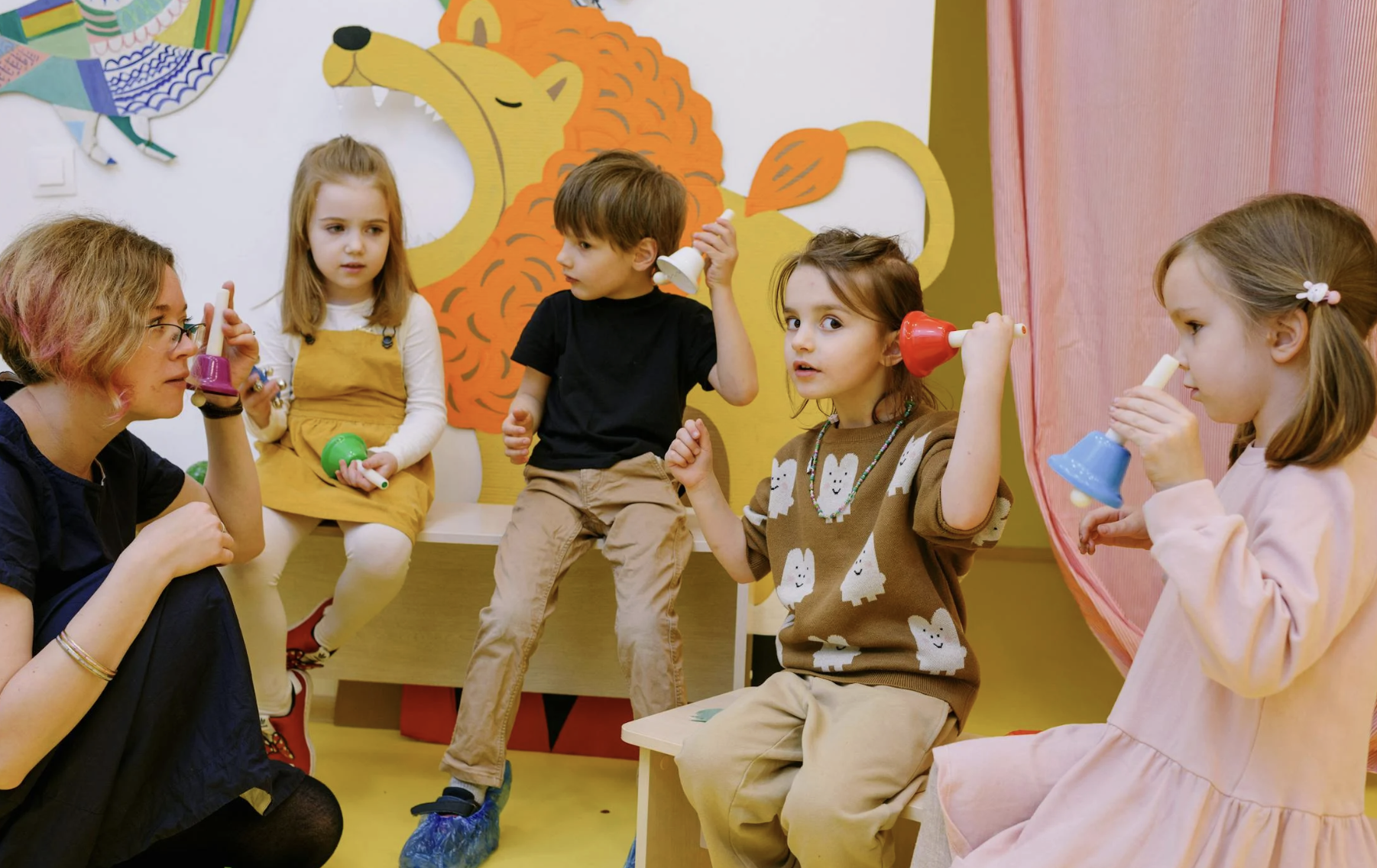
School-based ABA classroom support in NH happens in the setting your child spends most of their day. Sessions focus on skills tied directly to school success, like:
- Staying focused during instruction time
- Managing transitions between subjects or activities
- Building friendships and social skills at lunch or recess
- Following classroom routines and teacher instructions
- Handling sensory challenges that come up in a busy classroom
A therapist working in the school setting sees firsthand how your child handles group instruction, unstructured time, and social pressure.
Benefits Of School-Based ABA Therapy
Bringing therapy into the classroom offers advantages that other settings can’t fully match. Some of the biggest benefits include:
- Real-time support at school: Skills get practiced exactly where your child needs them, not just talked about after the fact.
- Direct collaboration with teachers: Our therapists communicate with school staff, so strategies stay consistent throughout the day.
- Stronger social skill development: Lunch, recess, and group work offer natural chances to practice friendship and communication skills with peers.
- Support tied to IEP goals: Therapy goals align with your child’s education plan, reducing overlap and confusion.
- Better generalization of skills: Skills learned in therapy transfer more easily when practiced in the classroom setting itself.
- Reduced classroom disruptions: Understanding the root cause of a behavior helps prevent it from escalating during instruction time.
- More consistent routines across the school day: Visual supports and strategies stay the same from morning to afternoon, which builds predictability for your child.
These benefits work together to help your child feel more confident and capable at school, not just during therapy sessions.
How Skills Carry Over Between Settings
Skills learned at home don’t always transfer to school automatically, and the same goes in reverse. That’s why our team works to connect the dots between both settings.
Here’s an example of how carryover works in practice:
| Skill Taught At Home | How It Shows Up At School |
| Asking for a break using words | Requesting a break during a tough classroom task |
| Following a two-step direction | Following teacher instructions during group work |
| Taking turns during a family game | Sharing materials during a classroom activity |
| Managing frustration during a routine change | Handling an unexpected schedule change at school |
Our therapists build these connections on purpose. A skill practiced in one setting gets reinforced in the other, so your child doesn’t have to relearn it twice.
What School-Based ABA With Acclimate ABA Can Look Like
Our school-based ABA therapy focuses on results you can see, like making friends at lunch, staying focused in class, and handling tough transitions without a struggle.
We partner directly with teachers to build strategies that fit into the classroom naturally. This might include:
- Meeting with teachers to understand classroom expectations and challenges
- Creating visual supports that match classroom routines
- Coaching classroom staff on strategies that work for your child
- Tracking progress on specific goals tied to your child’s IEP support
Our team believes therapy should support your child’s whole life, not just one hour a day. That’s why we take the time to build relationships with teachers, not just with your child.
Why Classroom Behavior Support Matters
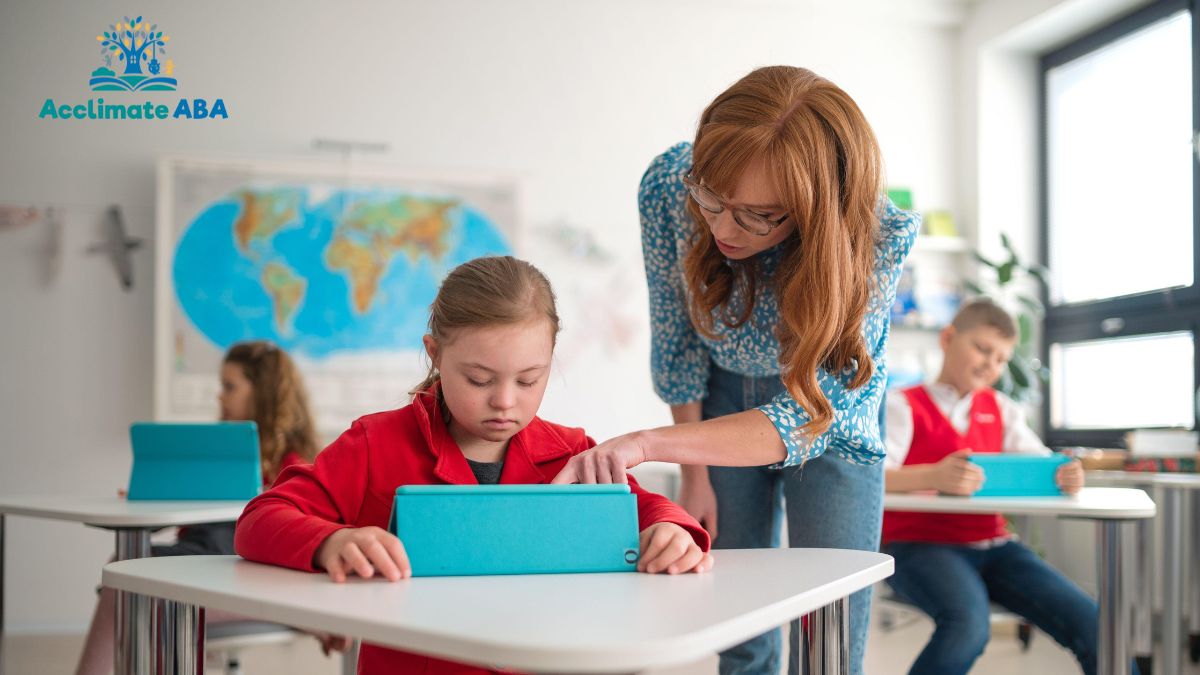
An autistic child struggling in the classroom often isn’t being defiant. They might be overwhelmed by noise, confused by unclear instructions, or unsure how to ask for help.
Classroom behavior support for autism in New Hampshire focuses on understanding the reason behind a behavior, not just stopping it. Our therapists ask questions like:
- What happened right before this behavior started?
- Is the environment too loud, bright, or busy for my child right now?
- Does my child have the words to express what they need?
- What’s reinforcing this behavior, even without meaning to?
Once our team understands the reason, we build a plan that addresses the root cause, not just the surface behavior.
Supporting IEP Goals Through ABA
Many families already work with a school on an Individualized Education Program. ABA support can strengthen those goals rather than duplicate them.
Our team collaborates with school staff to align therapy goals with IEP objectives. This keeps everyone working toward the same outcomes instead of pulling in different directions. Parents often tell us this coordination reduces stress and confusion during IEP meetings.
How To Get Started With Our School-Based ABA
Getting started is simpler than most parents expect. Here’s what the process typically looks like with our team:
- Initial Conversation: We learn about your child’s classroom challenges and goals.
- Assessment – Our team evaluates your child’s needs, often including observation in the school setting.
- Coordination With School Staff: We connect with teachers and staff to align on strategies.
- Individualized Plan: A treatment plan gets built around your child’s specific classroom challenges.
- Ongoing Support: Our team tracks progress and adjusts the plan as your child grows.
Learn more about our full range of services, or read more about our approach on our about us page.

Frequently Asked Questions
- Does school-based ABA replace in-home therapy?
No. Most children benefit from both. School-based therapy focuses on classroom skills, while in-home therapy builds routines and family communication.
- Will the school allow an outside ABA therapist in the classroom?
Many schools welcome collaboration with ABA providers, especially when the therapist supports IEP goals. Our team works directly with school staff to coordinate access and scheduling.
- How does Acclimate ABA work with teachers?
We meet with teachers to understand classroom expectations, then build strategies that fit naturally into the school day. Ongoing communication keeps everyone aligned.
- Can school-based ABA help with making friends?
Yes. Social skills development is a core focus of school-based support, including practice with peer interaction during lunch, recess, and group activities.
- How long before we see progress in the classroom?
Every child progresses at a different pace. Our team sets realistic goals and tracks data consistently, so you always know where things stand.

Let’s Help Your Child Succeed At School
Your child deserves support that follows them into the classroom, not just at home. School-based ABA in New Hampshire helps build the skills your child needs to focus, connect with peers, and handle the school day with more confidence.
At Acclimate ABA, we partner with teachers to create personalized strategies that set your child up for success. Start today.
Call us at (801) 843-5882, email hello@acclimateaba.com, or fill out our contact form, and we’ll call you back. Let’s build a plan that helps your child thrive, both in the classroom and beyond.

