

Key Points:
- ABA parent training fits into real-life home routines by using daily moments like brushing teeth, meals, and playtime to build skills.
- Trainers guide parents with simple steps, clear goals, and short sessions.
- Consistent practice during routines helps children gain communication, self-care, and cooperation skills.
Parents often feel pulled between therapy goals and the chaos of real life at home. Schedules feel full, energy feels low, and one more “program” can sound impossible. ABA parent training home routines aim to do the opposite. Instead of adding extra work, they weave coaching into teeth brushing, snack time, play, and bedtime that already happen every day.
As you learn how to do ABA therapy inside your own routines, small changes start to pile up into real growth.
 Why Do Home Routines Shape ABA Parent Training?
Autism now affects about 1 in 31 children in the United States, so many families are learning to balance therapy needs with everyday life. Schedules already include school, siblings, meals, chores, and work. Parent training works best when it respects that reality.
ABA relies on practice and repetition. Research on early intervention shows that when support starts in the toddler years, children often gain better language, social, and daily living skills over time. That is why home routines are such powerful teaching spaces.
Home routines give ABA teams information that cannot always appear in the clinic. Parents see which transitions cause meltdowns, which chores lead to refusals, and which small moments bring joy. When ABA parent training home routines focus on these exact moments, coaching feels more personal and more hopeful.
What Does ABA Parent Training Look Like In Everyday Life?
ABA parent training can happen in the clinic, at home, or through telehealth. The structure usually follows a simple pattern that fits many schedules.
A typical session often includes:
- Check In: Parent and trainer review how the week went, where routines went well, and where things fell apart.
- Teach: The trainer explains one concept in simple terms, such as how to give clear instructions or how to reinforce trying, not only perfection.
- Model: The trainer shows the skill with the child or with role play, so parents see what it looks and sounds like.
- Practice: Parents try the skill while the coach gives quiet feedback and encouragement.
- Plan: Together they choose one or two moments at home where the parent will practice before the next session.
Sessions do not focus on theory alone. Guidance centers on how to do applied behavior analysis in the rhythm of family life. Parents leave with a specific small assignment, such as “practice the new teeth brushing steps every night,” instead of a long list of abstract ideas.
ABA Parent Training Home Routines: Building Skills Around Your Day
Training routines begin with a simple question. Which moments already happen every day that this child could grow in? Coaches then layer teaching in those exact moments instead of adding brand new tasks.
Common anchor routines include:
- Morning Start: Waking up, getting dressed, brushing teeth, and leaving the house.
- Mealtime: Coming to the table, trying new foods, using utensils, and cleaning up.
- Play Blocks: Playing alone, playing with siblings, and joining shared games.
- Afternoon Reset: Returning from school, putting belongings away, and shifting to home activities.
- Bedtime: Bath, pajamas, story time, and lights out.
In each routine, the team chooses one or two target skills. Examples include:
- Communication: Asking for “more,” a “break,” or help instead of crying.
- Following Directions: Responding to short, clear instructions such as “put cup in sink.”
- Tolerance: Waiting a few seconds for a preferred item or sharing a toy.
- Self-Care: Steps like pulling up pants, rinsing a toothbrush, or turning off the faucet.
Over weeks, skills become automatic because they grew inside the routine where they belong.
How Do Trainers Turn A Routine Into A Teachable Plan?
ABA trainers often use one repeatable formula when they show parents how to get started with ABA therapy at home. The same pattern can apply to many different skills and ages.
The pattern usually looks like this:
- Define The Skill: State exactly what success looks like, such as “child brushes top teeth for five seconds.”
- Break It Into Steps: List each small action in order. For teeth brushing, this could mean “pick up toothbrush, turn on water, put brush under water, open toothpaste, squeeze pea-sized amount,” and so on.
- Choose Prompts: Decide how to help the child complete each step, starting with more help and planning how to fade that help over time.
- Choose Reinforcers: Pick small rewards the child values, such as praise, a short song, a sticker, or a quick turn with a favorite toy.
- Plan Practice: Decide where, when, and how often the parent will run through the steps during the week.
- Track Progress: Use a simple checklist or quick notes to record how many steps the child can now do with less help.
This approach gives parents a clear model of how to do applied behavior analysis without needing complex materials. Once families learn the sequence for one skill, they can reuse it for other targets like handwashing, packing a backpack, or putting toys away.
 Teeth Brushing Example: From Session To Home
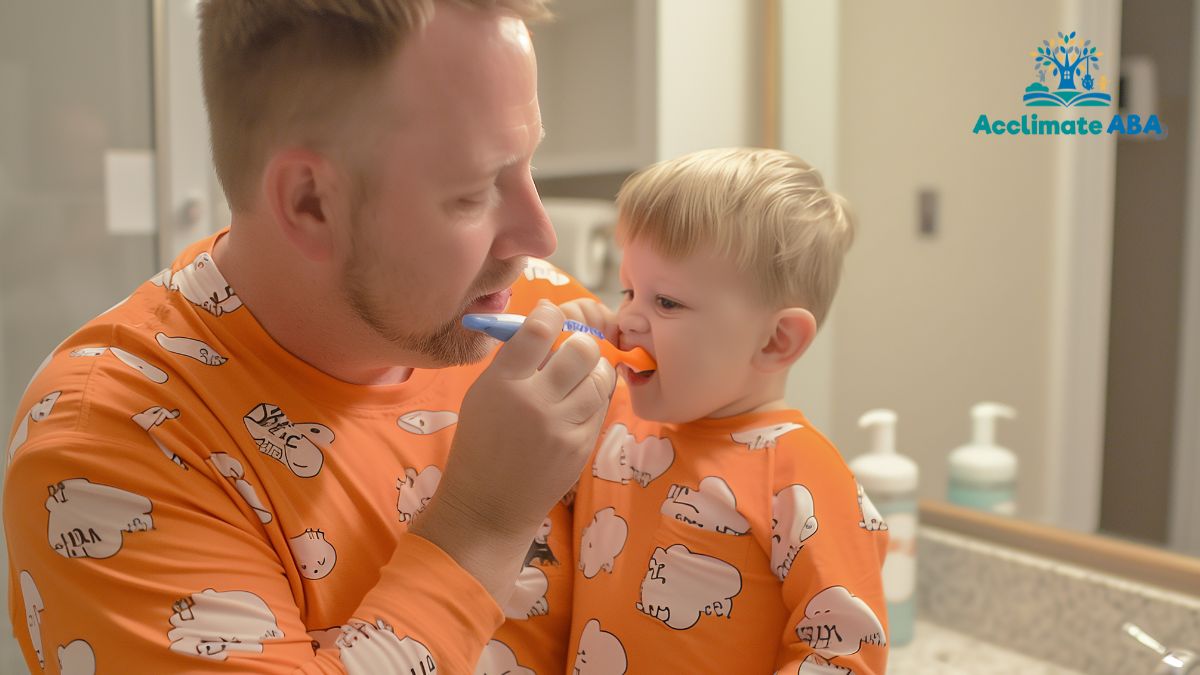
Teeth brushing offers a perfect example of “session to home” parent coaching. Many children resist the texture, taste, or length of this routine. ABA parent training home routines turn this daily struggle into a structured learning plan.
A trainer may start in a center setting by modeling the whole process with the child. The trainer shows how to give a short instruction, use a visual sequence, guide the child’s hand when needed, and praise each small step. Parents watch this from the side or through a mirror.
Next, the trainer invites the parent to try the same sequence while the coach gives feedback in real time. The homework for the week then feels concrete. The parent may agree to run the first three steps of the routine every night, reinforce cooperation with a short song, and write down how many times the child accepted the toothbrush.
Research on caregiver-mediated interventions shows that when parents practice in this way during daily routines, children often improve joint engagement, play, and cooperation after relatively brief coaching.
How Do We Fit Parent Training Into Busy Schedules?
Families often worry that ABA parent training will require long meetings and complex tracking sheets. Modern models aim to fit coaching into realistic time blocks while still honoring the science behind ABA.
Common formats include:
- Short Weekly Sessions: Thirty- to sixty-minute coaching visits that focus on one or two routines at a time.
- Telehealth ABA Visits: Video calls that let trainers observe real routines in the home without extra travel time. A meta-analysis found that telehealth caregiver coaching improved how well parents used strategies and reduced stress.
- Booster Check-Ins: Brief follow-ups every few weeks to adjust goals as the child grows.
Parents can help set the schedule by naming the most stressful times of day and the times when a coach could realistically watch. Some families prefer early evening; others choose weekend mornings.
Practical tools such as quick text reminders, photos of visual schedules, or short video clips can keep plans clear without adding a heavy paperwork load.
 How Can Parents Keep ABA Feeling Natural For Their Child?
Children learn best when teaching feels connected to their interests. ABA parent training aims to protect that warmth while still using structured methods.
Trainers often help parents:
- Follow Motivation: Use favorite toys, snacks, or topics as built in rewards during routines.
- Blend Play And Work: Turn chores into simple games, such as “race to the bathroom” or “count ten bubbles” in the bath. Parents can fold in ABA therapy games during these moments instead of saving them for sessions.
- Use Clear Language: Give short, specific instructions instead of long explanations that may confuse a child who processes speech slowly.
- Celebrate Small Steps: Notice when the child tries, even if the step is tiny. That attention keeps momentum going.
Therapists can share simple therapeutic activities for autistic children that need very little preparation, such as turn-taking with spoons while cooking or matching socks while doing laundry. As parents grow more confident, they start inventing their own variations that feel natural to their home.
Working As A Team: Parents, BCBAs, And Teachers
Children make the strongest gains when everyone around them shares the same goals. ABA parent training home routines often connect with school plans and community supports.
Board Certified Behavior Analysts (BCBAs) and therapists can:
- Share Targets With School: Align home goals such as “asking for a break” or “waiting in line” with Individualized Education Program (IEP) goals.
- Send Simple Notes: Use a two-way notebook or digital app to share which supports worked during the day and which routines felt hard.
- Offer Visuals: Provide copies of visual schedules, choice boards, or token systems so home and school use similar tools.
Parents can ask for clear explanations of how their child’s ABA therapy program connects home practice with classroom expectations. Some teams also start a skill in the clinic, where there is more control, then bring those ABA clinic ideas into home and school once the child understands the basics.
When everyone uses the same signals and rewards, the child sees a clear pattern instead of mixed messages. Research on parent-mediated and teacher-supported interventions shows that this type of shared approach improves social communication and daily functioning across settings.
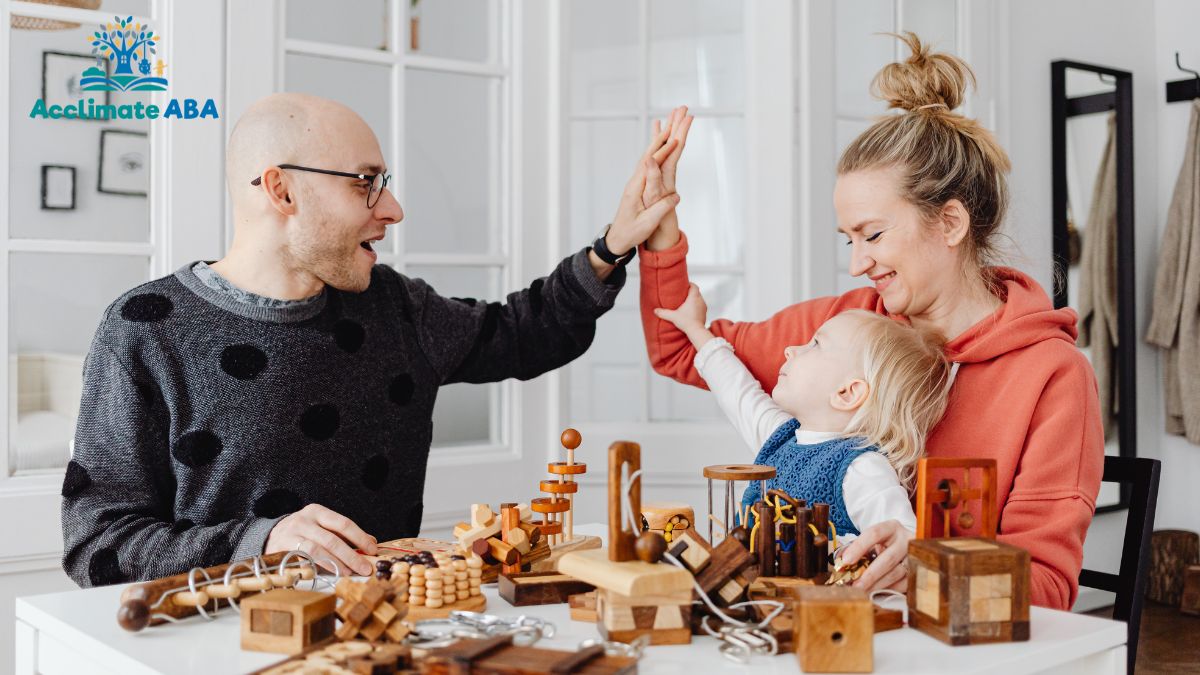 Turning Everyday Routines Into ABA Activities
Parents sometimes ask for a ready list of ABA activities for autism that fits many ages and abilities.
Examples include:
- During Meals: Practice requesting more food or drink, taking turns speaking, or clearing one dish from the table.
- During Play: Practice sharing materials, copying actions, and taking turns in small board games or pretend play.
- During Chores: Practice sorting laundry by color, matching lids to containers, or putting toys into labeled bins.
- During Community Trips: Practice walking with an adult, stopping at curbs, or ordering at a restaurant using a picture or short phrase.
For younger children, therapists may suggest structured ABA activities for 2 year olds, such as matching pictures, simple cause-and-effect toys, or short imitation games that fit into playtime. Guidance on how to do ABA therapy in these mini sessions gives parents a sense that they are teaching in ways that align with the child’s program.
Frequently Asked Questions
How many hours per week does ABA parent training usually take?
ABA parent training usually takes one to two hours per week of direct coaching. Parents are expected to apply strategies during daily routines outside those sessions. Frequency depends on the child’s needs and service model, but consistent home practice carries the most weight for progress.
Can ABA parent training help if my child is older or already in school?
ABA parent training helps even when children are older or already in school. Goals shift to age-appropriate skills like homework, screen time, or peer conflict. Parents use the same process. Such as define, prompt, and reinforce, while adjusting expectations to match developmental level and maintain respectful support.
What if our home routine feels unpredictable or chaotic?
Home routines can still support ABA strategies even when daily life feels chaotic. Families can use predictable anchor points like meals or bedtime to introduce small routines. Coaches help adapt plans to changing schedules. Consistent use of even one stable moment builds structure and supports gradual progress.
Turn Everyday Home Moments Into ABA Progress
ABA parent training home routines show parents that meaningful teaching can happen in the hallway, the kitchen, and the car, not only in a therapy room. Families who seek structured help can look for ABA therapy services in Utah that highlight parent coaching, routine based practice, and close collaboration with caregivers.
At Acclimate ABA, our teams partner with parents to design simple, realistic plans that turn everyday moments into chances to learn, connect, and grow. If you feel ready to see what this approach could look like for your family, reach out to schedule a conversation and learn how shared routines can support progress at home, in school, and beyond.

