


Key Points:
- Family-centered ABA therapy empowers parents and caregivers to use everyday routines as meaningful moments of learning for a child with autism.
- With the right guidance, home-based ABA therapy can become part of daily life, supporting both child development and stronger family connections.
- Practical strategies, rooted in ABA parenting, autism parent training, and family behavior therapy, help embed skill-building into meals, playtime, errands, and transitions.
- Ongoing training (such as ABA therapy training and autism parent training) equips families to partner with therapists, monitor progress, and adapt as needs change.
- Viewing ABA family therapy not just as clinic-based sessions but as a holistic, embedded approach shifts the dynamic from “therapy time” to “learning all day.”
If your child has been diagnosed with autism, you may have heard about traditional clinic-based interventions. But what about bringing learning into everyday life? Family-centered ABA therapy offers a different path: instead of waiting for “therapy time,” it invites you to turn breakfast, car rides, and playtime into opportunities for growth.
This article guides parents and caregivers in how to use ABA parenting strategies, home-based ABA therapy ideas, and day-to-day family behavior therapy tools to strengthen your child’s skills while deepening your connection.
What is “Family-Centered ABA Therapy”?
Family-centered ABA therapy places your family, and your home environment, at the center of the intervention process. Rather than seeing therapy as something separate, it becomes woven into your daily routines.
In this model, your child receives the structured benefits of ABA (Applied Behavior Analysis), but the setting becomes everyday life: meals, free-play, dressing, transitions. You as parent or caregiver become a partner in intervention, not solely an observer.
This means your role in parenting and autism changes: you receive autism parent training, collaborate on goal-setting, and apply ABA therapy tips in a home-based context. In doing so your child’s natural environments become rich with teaching opportunities, and you build skills in ABA family therapy that extend beyond the clinic walls.
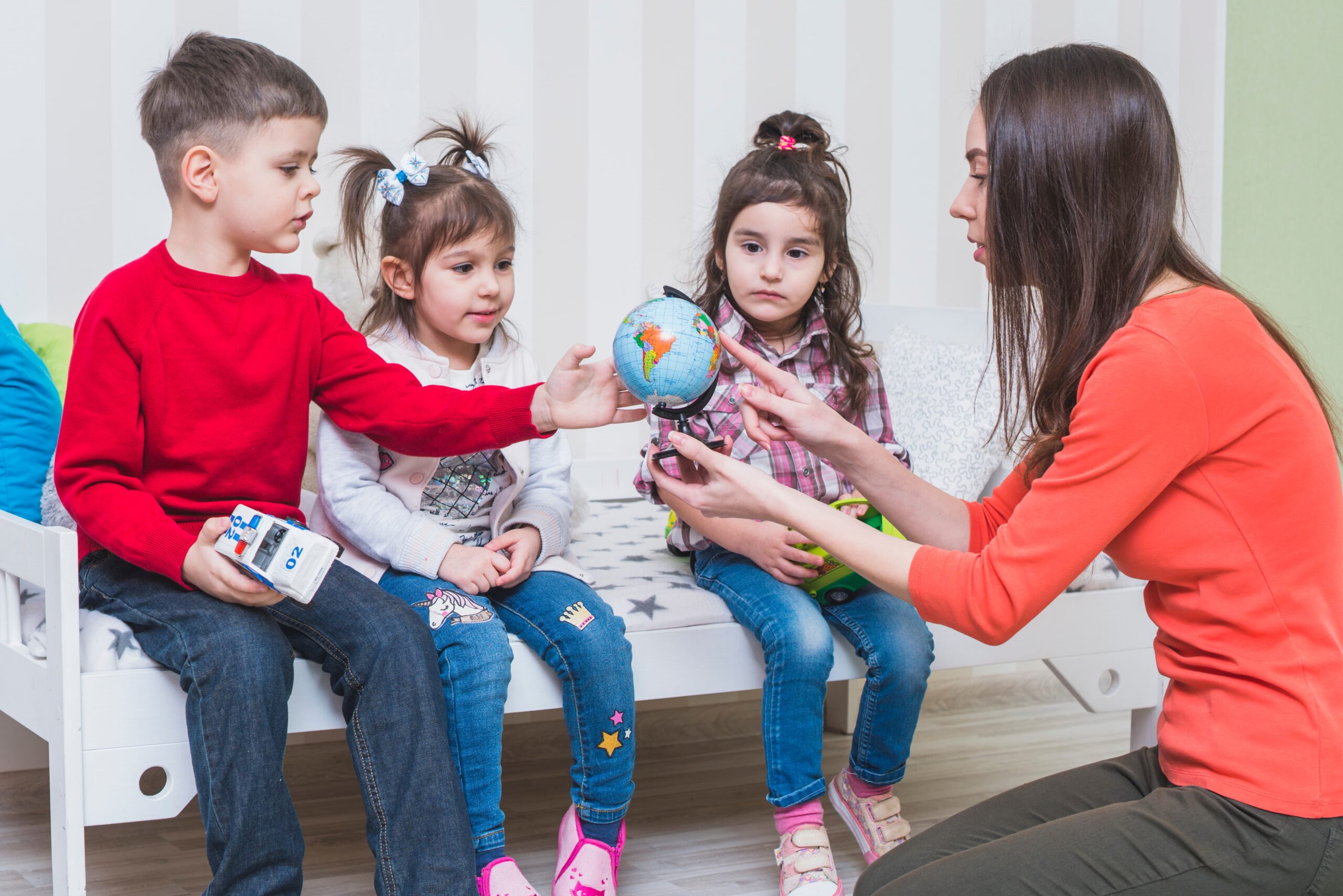 Why Everyday Moments Matter
It’s easy to assume that therapy must happen in a formal setting. But children learn best when skills are taught in meaningful, routine contexts. When you embed teaching into daily life, you gain several advantages:
- The environment is familiar and comfortable for your child, reducing stress and increasing engagement.
- Learning becomes more functional – skills apply right away (e.g., hand-washing, waiting in line, asking for help).
- You get more “teachable moments” across the day than what might be possible in a single therapy session.
- Your involvement reinforces the message: “You can learn and use this everywhere”, not just in therapy.
Given that research shows intensive and sustained ABA interventions yield stronger outcomes (for example, gains in IQ, adaptive behavior, communication). So making every day count matters.
Setting the Stage: Preparing for Family-Centered ABA
Before diving in, here are foundational steps:
- Define clear, realistic goals with your therapist/BCBA: What skill(s) do you want your child to learn in your everyday routines? This is part of autism family therapy.
- Map your routines: Identify 3-5 daily or frequent moments (mealtimes, car rides, play, bedtime) where you can embed teaching.
- Train the adults: Participate in ABA therapy training or autism parent training so you understand the behavioral principles, data collection, prompting, reinforcement, fading.
- Create a flexible plan: Decide what teaching looks like in each routine. For example, while waiting at a red light in the car, working on “waiting” or “requesting help.”
- Gather the resources: Visual schedules, token boards, reinforcement systems, a way to track progress (simple chart, app). These support home-based ABA therapy.
Embedding Learning into Routines
Here are specific ABA therapy ideas for common daily routines, using family behavior therapy principles:
Mealtime
- Use a visual schedule: “Sit > Wash hands > Pick fork > Eat.” When your child completes each step, provide immediate praise or a token.
- During waiting (e.g., for food to arrive), model an appropriate request: “Please wait” and prompt your child to say or gesture “wait” rather than negative behavior.
- Teach self-feeding skills: Break down the act into small steps (pick up fork, scoop food, bring to mouth). Reinforce each step.
- Use incidental teaching: When your child grabs something, pause and ask “What’s this?” or “Can you say ___?” This is an example of ABA therapy tips in action.
Car Rides / Errands
- In the car: Ask your child to point out red lights, count stop signs, request “I look,” teach turn-taking in conversation. You’re using a natural environment for learning (home based ABA therapy).
- At the store: Before entering, prompt your child: “We will pick one apple and one banana. Then we will pay.” Use a visual board. Reinforce compliance, waiting, and communication.
- Use wait times: At checkout, while waiting in line, teach “hold my hand,” “quiet voice,” or “my turn.” Reinforcement is immediate.
- Use reinforcement systems: For example, for every 5 good behaviors in the car or store, the child earns a preferred activity at home. This reflects ABA family therapy strategies.
Playtime and Leisure
- Choose play activities that cater to your child’s interests, then embed targeted skills (sharing, requesting, turn-taking, imaginative play).
- Use prompting and fading: initially prompt the child to ask for a toy, then slowly remove prompts as they gain skill.
- Use natural reinforcement: If your child asks, “ball please,” you deliver the ball—teaching communicative request rather than waiting for “perfect” form.
- Introduce problem-solving moments: If the play structure doesn’t work, prompt “help me fix it,” and reinforce attempts, even if imperfect.
Transition Times (Morning Routine, Bedtime)
- Visual schedules: Create a routine board (brush teeth → pajamas → story → sleep). Your child checks off each step.
- Teach waiting and flexibility: If the doorbell rings before bedtime, prompt “wait,” “one more step,” “then we go.” Reinforce patience.
- Use incidental teaching: At bedtime, ask “What did you like most today?” Prompt the child to respond, reinforcing communication and reflection.
- Teach self-monitoring: For older children, use a simple checklist they tick themselves before bed. This builds independence, the core goal of family behavior therapy.
Partnering with Professionals: Collaboration and Monitoring
Family-centered ABA therapy works best when you and your therapist collaborate. Here’s how:
- Data tracking: Keep simple, consistent data (e.g., number of independent requests, times child waited without meltdown). Collect data in your routine so you and the BCBA can review.
- Regular reviews: Meet with your therapist/BCBA monthly (or more often) to review progress, adjust goals, and adjust reinforcement systems.
- Training refreshers: Periodic ABA therapy training for you (parents/caregivers) ensures you’re confident in prompting, reinforcement, and generalization.
- Generalization focus: Professionals ensure that skills taught during formal sessions transfer to your home routines (the core of ABA parent training and ABA family therapy).
- Family involvement: Siblings, extended family, and caregivers should be informed about the plan, as this supports consistency across settings, a key principle in family behavior therapy.
Addressing Common Pain Points
Working in everyday settings brings unique challenges. Here are common pain points and solutions:
- Feeling overwhelmed: You might think you need to “do therapy all day.” In fact, identify 2–3 key routines and build gradually. It’s not about every minute, but high-quality opportunities.
- Consistency issues: When reinforcement is inconsistent, progress stalls. Tip: use a token board or visual chart and train everyone (family, babysitter) in the system.
- Data burnout: Logging every behavior can feel like extra work. Simplify: use a one-page tracker for each routine and update at set times (e.g., before dinner).
- Generalization failures: Skills mastered in one context don’t transfer (e.g., child may request only with the therapist, not at home). Address by purposely shifting settings, people, and tasks while reinforcing the same goal.
- Sibling or parental stress: Embedding learning into routines can feel like “another job.” Solution: Share responsibilities, rotate tasks, and schedule family downtime to avoid burnout.
Tips and Best Practices for Parents
Here are practical ABA therapy tips for families:
- Always keep reinforcement strong and meaningful. Preferred items/activities need to truly motivate your child.
- Use errorless teaching when possible: prompt quickly and fade slowly to avoid frustration.
- Use natural reinforcement: whenever your child uses a functional skill (e.g., asking for help), immediately give access to the desired item or moment.
- Fade prompts gradually: Over time, allow your child to do more independently. This is central to ABA parenting and automation of skills.
- Celebrate progress, no matter how small. Reinforcing small successes builds momentum.
- Monitor generalization: Ask yourself, “Is my child using this skill only in therapy, or across settings?” If not, adjust the environment.
- Keep sessions short but frequent: embedding brief teaching moments across the day is more effective than one long forced session.
- Prioritize communication first: Many challenging behaviors stem from frustration or limited communication. Teaching a request can reduce meltdowns.
 Why This Approach Matters for Families
When you use family-centered ABA and home-based ABA therapy, you are not only teaching skills, but also changing how your family experiences everyday life. Your child isn’t just “in therapy,” they are learning as part of your family rhythm. You become a confident partner in intervention rather than solely a bystander. The skills your child acquires are more likely to generalize into school, community, and future settings. Studies show that children engaged in well-implemented ABA interventions demonstrate measurable gains in IQ, communication, and adaptive behavior. Furthermore, when families participate in the process, consistency increases and outcomes improve.
Wrapping Up: A Vision for Everyday Progress
Thinking of ABA therapy only as a clinic-based intervention misses the full potential of your family’s capacity for growth. With family-centered ABA therapy, you harness everyday moments, like meals, errands, play, and transitions, to build skills naturally and meaningfully. As you engage in ABA parenting practices, integrate autism parent training, use home-based ABA therapy ideas, and work alongside professionals in autism family therapy and ABA family therapy, you create a learning-rich environment that aligns with your child’s life.
Your child can acquire communication skills, adaptive behaviors, independence, and social connection not just in a therapy room, but in your car, kitchen, playground, and living room. With thoughtful design, consistent training, and ongoing collaboration, your family becomes the engine of positive change.
Ready to bring this approach into your home? Contact the team at Acclimate ABA for evidence-based ABA therapy services in Utah. Our family behavior therapy program at Acclimate ABA is designed to empower parents and integrate daily routines into meaningful learning. Schedule a consultation and learn how home-based ABA therapy in Utah can be tailored to your family’s rhythms and your child’s goals.

