


Key Points:
- Structured routines and visual supports are crucial in a kindergarten classroom for autism.
- Sensory-friendly environments and individual accommodations can improve focus and comfort.
- Collaboration with parents and specialists leads to more effective support strategies.
Children on the autism spectrum often experience challenges related to communication, transitions, and sensory processing. Creating a supportive kindergarten classroom requires intentional planning, consistent routines, and a flexible approach to meet each child’s needs.
Addressing these developmental differences early sets the stage for long-term learning success. According to research, signs of autism usually appear by age 2 or 3, meaning many children start kindergarten with either a formal diagnosis or emerging characteristics that require understanding and support.
What Is a Kindergarten Classroom for Autism?
A kindergarten classroom for autism should be structured, predictable, and tailored to support sensory, communication, and behavioral needs. It doesn’t need to be a separate room; inclusion is possible with the right supports.
The classroom environment must anticipate challenges that may arise for autistic students and be equipped with evidence-based strategies. This may include visual schedules, sensory zones, and individualized learning materials. The goal is to foster a space where every child feels safe, understood, and ready to learn.
How Do You Design an Autism-Friendly Kindergarten Classroom?
Designing a classroom that accommodates autistic students involves far more than colorful posters and quiet corners. It requires intention in layout, instruction, and sensory regulation. Creating predictable routines and reducing overstimulation can be a game-changer.
Here are some essential components:
1. Clear Physical Boundaries
Designate activity areas using rugs, shelving units, or floor tape. Defined zones help autistic students understand spatial expectations and reduce anxiety about where to go during different parts of the day.
2. Minimized Sensory Distractions
Limit bright lights, loud sounds, or overwhelming visual clutter. A calm, low-stimulation environment helps autistic children stay regulated and focused without feeling overwhelmed or distressed.
3. Flexible Seating Options
Offer various seating choices like wobble stools, cushions, or bean bags. Sensory-friendly seating supports self-regulation and gives children the movement they may need without leaving their workspace.
4. Accessible Visuals
Label items and routines with photos or icons. Visual supports enhance comprehension, ease transitions, and promote independence for students with language or processing differences.
What Teaching Strategies Work Best in Kindergarten Classrooms?
Effective teaching for autistic kindergarteners means blending structure with responsiveness. Educators must maintain consistency while adjusting to individual learning needs and communication styles.
Some impactful teaching strategies include:
1. Use of Visual Aids
Incorporate visual prompts like charts, picture cards, and visual schedules. These tools clarify instructions, support memory, and reduce anxiety by showing what to expect during classroom routines and activities.
2. Task Analysis
Break complex tasks into smaller, step-by-step instructions. This method supports comprehension, builds independence, and helps students achieve success with less frustration or overwhelm.
3. First-Then Boards
Use “First-Then” visuals to link non-preferred tasks with motivating outcomes. These boards guide behavior, encourage task completion, and help children transition more smoothly between activities.
4. Positive Reinforcement
Praise specific behaviors and reward progress consistently. Celebrating small wins boosts confidence, increases motivation, and encourages continued effort in learning and social participation.
What Kind of Visual Supports Should Be Used for Kindergarten Classrooms?
Visual supports play a crucial role in helping autistic kindergarteners understand routines, expectations, and transitions. These tools can include visual schedules, First-Then boards, labeled bins, emotion charts, and picture instructions.
They reduce anxiety and foster independence by providing predictable, concrete information, especially important for children who may struggle with verbal communication. The most effective visual supports are tailored to each child’s developmental level and learning style.
Using consistent icons or photos across different environments (classroom, home, therapy) creates familiarity. Teachers can gradually fade supports as students become more confident.
How Can Sensory Needs Be Managed in the Classroom?
Many autistic children experience sensory sensitivities that affect their comfort and behavior in a classroom. A proactive approach involves creating an environment that acknowledges and accommodates sensory differences.
Here are ways to address sensory needs:
1. Create a Sensory Break Area
Designate a quiet space with tools like noise-canceling headphones, fidget toys, or weighted blankets to support regulation and calm.
2. Incorporate Sensory Activities
Include hands-on options like tactile bins, playdough, or movement breaks to meet sensory needs and improve focus and engagement.
3. Adjust Lighting
Use natural light or soft, indirect lamps instead of harsh fluorescent lighting to reduce visual overstimulation and support concentration.
4. Use Calming Colors
Decorate the classroom with muted, soothing tones to create a visually peaceful environment that minimizes sensory overwhelm and distraction.
How Can You Support Social Skills Development in Autism?
Supporting social skills in autistic children involves explicit teaching, modeling, and consistent practice in natural settings. Unlike neurotypical peers, children with autism often benefit from structured opportunities to learn social norms and cues.
Using visual supports, social stories, and role-playing can help clarify expectations. Peer-mediated interactions and small group activities allow for real-time practice and feedback. When combined with reinforcement and gentle guidance, these strategies help children build confidence, improve communication, and engage more meaningfully with others.
How Do You Handle Transitions and Routines?
Transitions can be particularly stressful for young autistic learners. Unexpected changes can lead to anxiety or meltdowns. Establishing clear routines and preparing students ahead of time is essential.
Here are helpful transition strategies:
1. Countdown Warnings
Giving verbal or visual countdowns before transitions helps autistic children anticipate changes, reducing anxiety and increasing cooperation during activity shifts throughout the school day.
2. Consistent Routines
Establishing predictable daily routines provides structure, helping children feel secure and better understand what’s expected, especially important for those who struggle with unexpected changes.
3. Transition Objects
Allowing a child to carry a familiar item during transitions offers emotional comfort and can ease the stress of moving between activities or environments.
4. Visual Transition Cues
Using images or icons to signal upcoming activities supports comprehension and prepares children for changes, especially when verbal instructions are overwhelming or unclear.
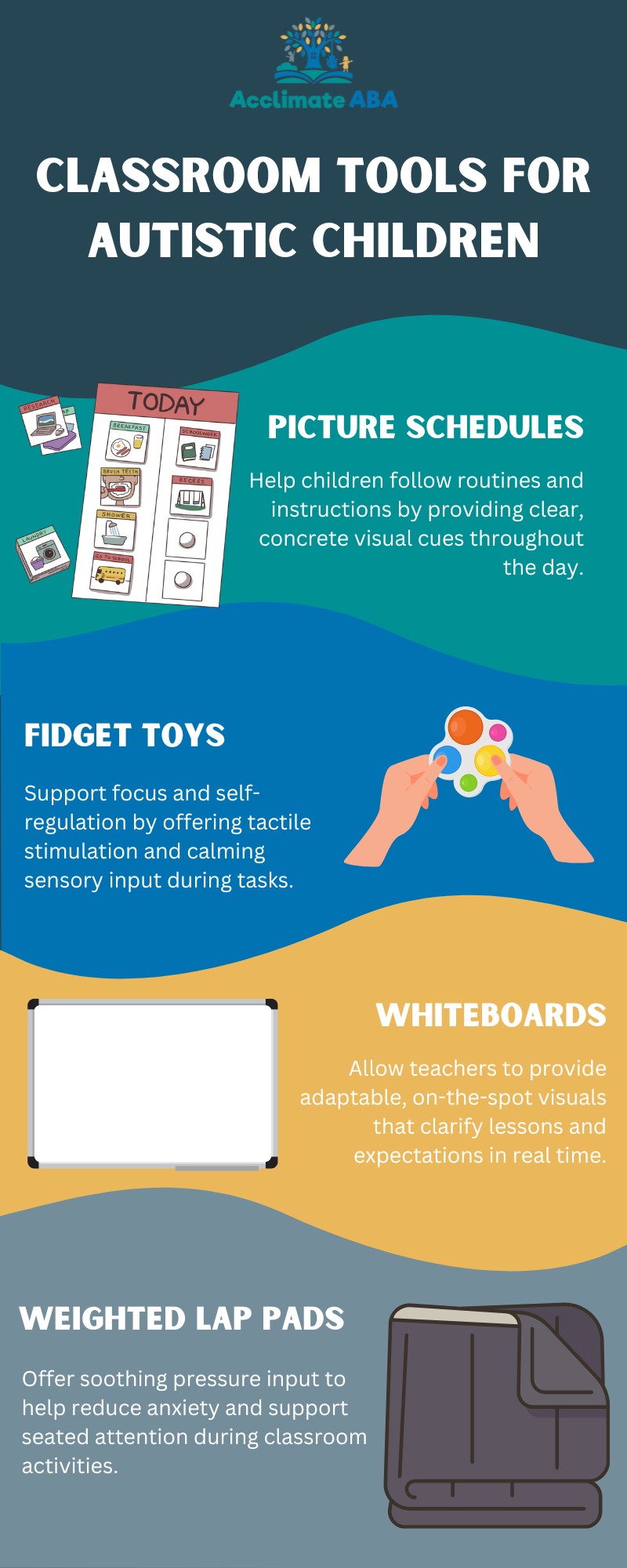
What Classroom Tools or Materials Are Most Helpful?
Autistic students benefit from hands-on, visual, and sensory-based materials. These tools enhance engagement, understanding, and emotional regulation. Selecting the right materials can make lessons more accessible and enjoyable.
Useful classroom items may include:
What Role Does ABA Therapy Play in the Kindergarten Setting?
ABA (Applied Behavior Analysis) therapy supports autistic kindergarteners by reinforcing positive behaviors, improving communication, and teaching daily routines. In school settings, ABA strategies help children follow instructions, reduce meltdowns, and build independence.
Therapists may collaborate with teachers to individualize strategies, provide classroom-based interventions, and use visual supports or token systems to guide behavior. When ABA is integrated into the school environment, it creates consistency between home and classroom, making transitions smoother and learning more effective.
Support Everyday Success With ABA Therapy
Building a successful kindergarten classroom for autism is only one part of the journey. Many children benefit from targeted support outside the school environment, especially in developing functional life skills and reducing behavior concerns. That’s where ABA therapy comes in.
Acclimate ABA offers personalized ABA therapy in Utah, supporting families and educators alike in building consistent routines and teaching meaningful skills. Our approach is compassionate, data-driven, and child-centered.
Get in touch with us to learn how our ABA programs can help your child thrive in and out of the classroom.

