

Key Points:
- ABA builds practical skills through daily routines by breaking tasks into small, teachable steps, using visual cues, prompt fading, and immediate reinforcement.
- Skills like dressing, toothbrushing, and transitions improve when practiced during real routines.
- Consistent parent-led repetition builds independence and keeps progress visible and sustainable.
Morning rush, skipped breakfast, and a tug-of-war over getting dressed can drain the whole household. Applied Behavior Analysis (ABA) uses what already happens at home and breaks it into small, doable actions. The goal is fewer power struggles and more real-life skills that last beyond therapy hours.
Up next, expect practical steps, daily routine examples you can try, and simple metrics to track progress without extra stress.
 Why Use Home Routines as Your ABA “Classroom”?
Daily life offers natural cues, built-in repetition, and clear rewards. ABA taps those features to shape practical skills such as dressing, toothbrushing, meal prep, and homework readiness. The approach pairs small tasks with ABA prompts, models, and immediate reinforcement so success shows up during real moments, not just clinic time.
One quick reality check on need: the CDC now estimates about 1 in 31 U.S. 8-year-olds meet criteria for autism. Many families want simple home systems that make mornings, mealtimes, and bedtime run smoother while building independence. ABA daily routines connect therapy goals to the places where skills will be used most.
Try these structures that fit right into daily living:
- Task analysis: Break “get dressed” into small steps with plain words and pictures.
- Prompt fading: Start with a model or gesture, then fade to a brief verbal cue.
- Reinforcement: Pair each step or a short chain of steps with praise or a preferred micro-reward (e.g., song, sticker, or brief play).
What Does Skill-Building Look Like in a Typical Day?
Home life already provides daily activity examples that map cleanly to ABA. Choose one anchor routine per part of the day and make it teachable with visual schedules, timers, and brief practice. Keep sessions short and wins frequent. ABA daily routines work best when you repeat the same steps at about the same time.
Anchor points you can standardize:
- Morning: Dress, brush teeth, backpack check, simple breakfast job.
- After school: Snack setup, handwashing, start-task cue for homework.
- Evening: Bath, pajamas, put toys in bins, choose tomorrow’s clothes.
A well-known randomized trial found that structured parent training produced a 68.5% clinician-rated positive response at 24 weeks, compared with 39.6% for parent education. That difference highlights why ABA parent training in daily routines moves behavior faster than information alone. Put another way, the routine is the intervention.
Practical add-ons:
- Use a First–Then board to connect “first brush teeth, then book time.”
- Use a two-minute timer to frame effort without arguments.
- End each routine with a success signal (high-five, quick note on a chart).
 How Do Visuals and Schedules Reduce Pushback?
Picture sequences, checklists, and simple timers act as visual supports that make expectations clear and cut down on verbal prompts. Research on visual activity schedules shows benefits for on-task behavior, transitions, and independence across many skills.
Families can start with two to four pictures per routine and add words only if helpful. Laminated cards with Velcro tabs or a phone-based checklist both work.
Steps to roll out a schedule at home:
- Choose one routine and build a 3–6 step visual.
- Teach the sequence by modeling it once, then guide hand-over-hand only for the hardest step.
- Use prompt fading by moving from gesture to point to silent proximity.
Helpful example daily routine boards:
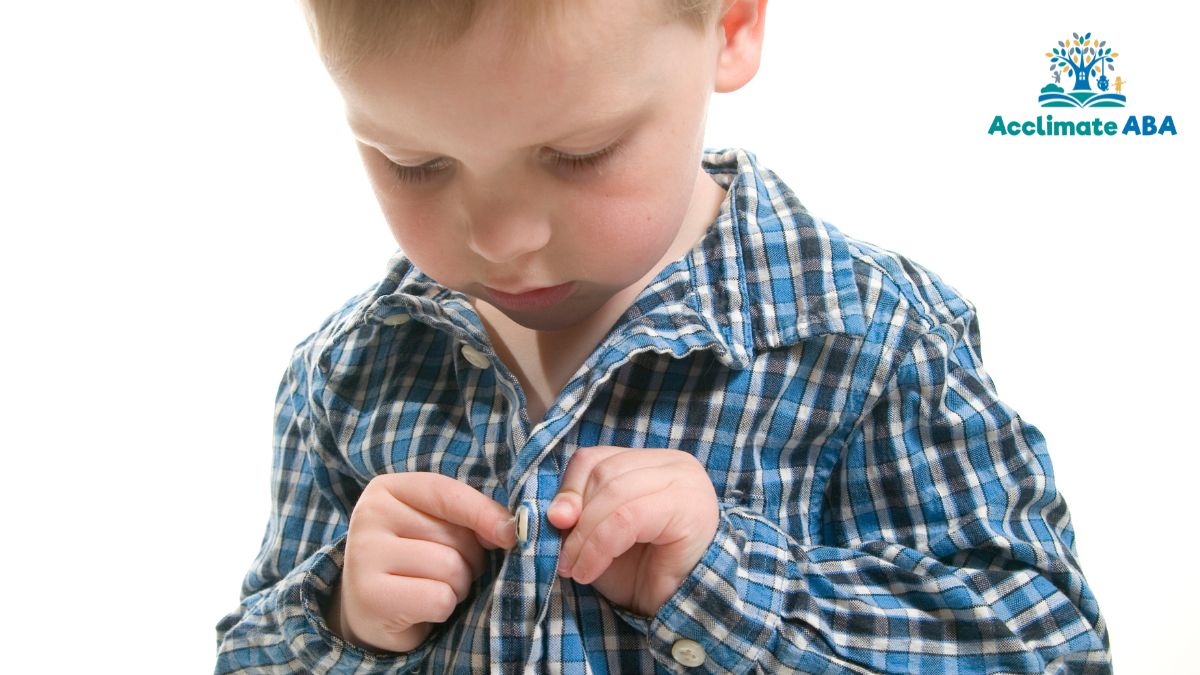
- Get Dressed: underwear → shirt → pants → socks → shoes.
- After-School Reset: shoes in bin → wash hands → snack plate → backpack check → five-minute break.
- Bedtime Wind-Down: shower → pajamas → brush teeth → two pages of book → lights.
Tip: keep visuals at the child’s eye level where the routine starts. The fewer words, the better the flow.
ABA Daily Routines: Build Independence in Meals, Hygiene, and Play
ABA daily routines thrive when you pair one clear target with one clear success signal. The goal is independence on meaningful steps, not perfection. Use daily routine examples below and log wins with quick tally marks so progress is visible to you and your child.
Mealtimes (choose one target):
- Utensil use: one scoop-and-eat per bite without adult correction.
- Set the table: place cup, plate, fork for one person before own seat.
- Try a new food: one pea-sized bite after a visual “food ladder.”
Hygiene (choose one target):
- Toothbrushing chain: turn on water → paste on brush → top teeth → bottom teeth → rinse.
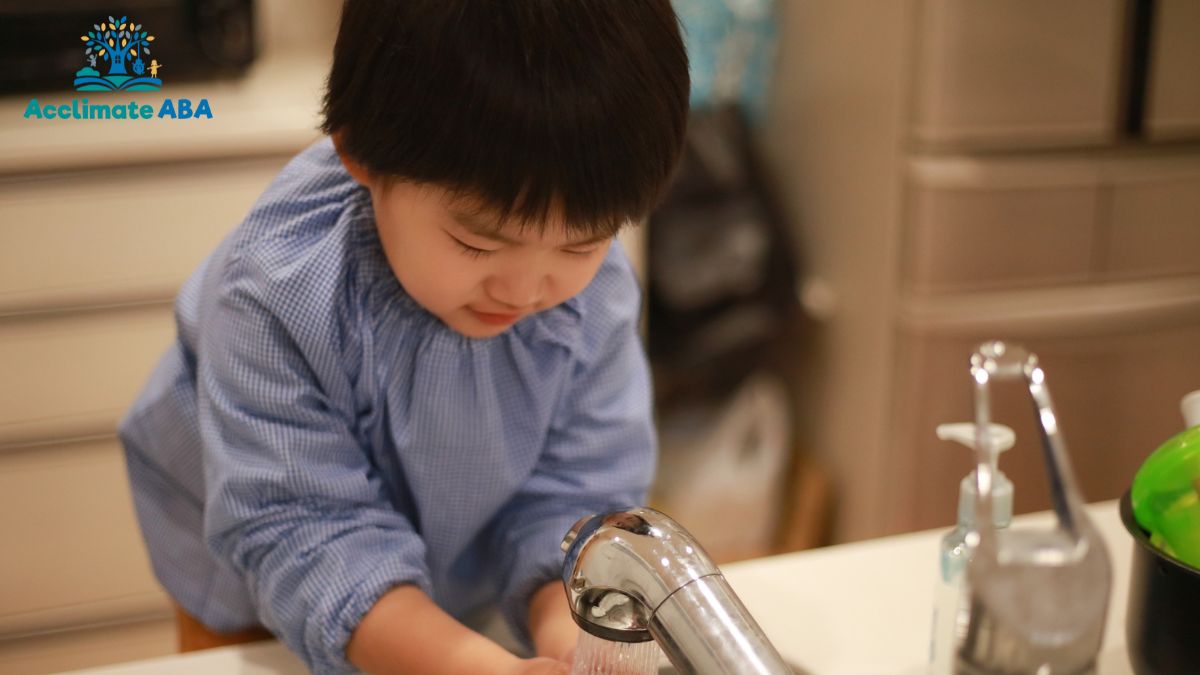
- Handwashing: wet → soap → scrub to song → rinse → dry.
- Bath independence: wash hair with a color-coded cup for rinsing.
Play and social (choose one target):
- Turn taking: 1-minute timer, pass the toy on the beep.
- Requesting help: show or hand over an “help please” card when stuck.
- Clean-up: match toy to labeled bin for three items before new game.
How Do We Use Data Without Making Home Feel Clinical?
Track the smallest observable action that defines success and keep data light. One tally per success, one dot per prompt. Reserve Functional Behavior Assessment (FBA) for patterns that persist. ABA daily routines need only a 30-second check-in after each run to decide whether to keep, stretch, or fade a support.
Simple data tools that fit real homes:
- Two-column card: Step name on left, date on top, quick ✓ or • per attempt.
- Goal line: “Three independent steps before Friday.” Draw a star when met.
- Prompt meter: H (hand), G (gesture), V (verbal), Ø (independent) for each step.
One review of parent-mediated approaches reports improvements in language understanding and reductions in autism characteristics in several studies, underscoring why quick, repeated practice by caregivers becomes a growth engine. Use that insight to justify short, frequent reps rather than long, infrequent sessions.
 Daily Routine Examples You Can Start Tonight
Pick one routine. Teach one step at a time. Celebrate a clear win. The following examples of daily routine sequences keep language simple and measurable.
1) Toothbrushing (4–6 minutes total)
Transition: “Brushing card,” sand timer on the sink.
Reinforcement: two minutes of songs after completion.
- Get brush and paste from the cup and stand at the sink.
- Put a pea-sized dot of paste on brush, turn on water, and wet brush.
- Brush top teeth with five circles, then bottom teeth with five circles.
- Rinse brush and mouth, put items back, and mark the chart.
2) After-school reset (5–7 minutes total)
Transition: photo card on the door.
Reinforcement: one comic page or short video.
- Put shoes in the basket and hang backpack on hook.
- Wash hands with soap to the chorus of a favorite song.
- Place snack plate on table and choose one fruit.
- Open planner and point to the first homework task.
3) Bedtime (10–12 minutes of teachable steps)
Transition: bedtime checklist by the bedroom door.
Reinforcement: two pages of a story.
- Shower, dry, and put pajamas in the hamper.
- Brush teeth and place brush in the cup.
- Choose tomorrow’s shirt and place it on the chair.
- Turn off the main light and use the reading lamp for story time.
As you grow these routines, remember the broader daily activities example rule: teach what you will expect again tomorrow.
 How Many Reps and Hours Actually Help?
Guidance pieces describe focused ABA in the 10–25 hours per week range, with early intensive models often at 25–40+ hours weekly over one to two years. Rather than chase a number first, lock in routines that happen every day, then add minutes or steps.
A consistent 10-minute routine, done twice daily, builds 140 minutes of high-value practice each week before any formal therapy begins. There is also strong support for parent training as the driver.
In one multicenter trial, caregiver coaching led to a bigger drop in irritability scores and a higher 68.5% clinician-rated response at 24 weeks compared with 39.6% in the education control. That makes a case for brief, structured coaching that shows you how prompting in ABA works and how to fade supports inside real routines.
Finally, scale expectations to your child’s age and attention span. Short reps, many wins, and steady fading usually beat long sessions.
ABA Daily Routines in a One-Week Starter Plan
Commit to one routine each for morning, after-school, and bedtime. Keep language the same each day, and use one example daily routine board per target.
Week 1 outline
- Mon–Tue: Teach with full prompts. Model, guide, praise each step.
- Wed–Thu: Fade to gestures and brief verbal cues. Mark success on a small card.
- Fri–Sun: Aim for independence on the first two steps; keep prompts for the rest.
Make it durable
- Post visuals where the routine starts.
- Keep rewards brief and immediate.
- Review the card once daily, and choose one change for tomorrow: remove a prompt, add a step, or raise quality (e.g., “five circles per side” for brushing).
Research on visual schedules backs this plan by showing improved transitions and self-management across different skills and settings.
 ABA Daily Routines: Troubleshooting Common Roadblocks
Routine-building can stall for predictable reasons. Tighten the plan rather than starting over.
- Too many steps: Cut the chain in half and teach the second half later.
- Power struggles: Switch to a first-then card and add a two-minute timer.
- Nag fatigue: Point to the visual instead of repeating directions.
- Motivation dips: Use a tiny menu of choices within the routine (pick the cup, pick the song, pick the book).
If progress slows for weeks, consider formal caregiver coaching. Evidence shows that when parents get targeted training, disruptive behaviors drop more and clinical response rates rise compared with information-only programs.
Frequently Asked Questions
What is a typical day in ABA therapy?
A typical day in ABA therapy combines short teaching trials with play, movement, and structured breaks. Sessions focus on communication, daily living, and behavior goals, using step-by-step instruction and frequent rewards. Home practice through predictable routines extends gains beyond the clinic and supports skill generalization.
What are everyday examples of ABA?
Everyday examples of ABA include visual checklists for dressing, first-then cards for brushing teeth, and timers to support sharing. During meals, one bite of a new food earns praise, with prompts faded gradually. These tools improve transitions, task focus, and communication when used consistently in home routines.
How many hours of ABA per day?
ABA therapy ranges from 2–8 hours per day depending on program intensity. Focused plans often run 2–5 hours daily, while intensive models may reach 6–8 hours. Across a week, totals span 10–25 hours for focused and 25–40+ for intensive. Daily routines at home add key practice that boosts generalization.
Take the Next Step Toward Smoother Home Routines
Understanding how to weave skills into breakfast, bath, and bedtime turns therapy goals into daily independence. Reliable ABA therapy services in Utah can coach you through the exact prompts, visuals, and reinforcement that fit your family’s schedule and your child’s strengths.
At Acclimate ABA, programs emphasize parent training so routines improve faster and keep improving after sessions end. If you want practical tools that work in your kitchen, bathroom, and bedroom, reach out to start a plan that builds real skills where they are needed most.

